
Marine, vessels and ports
Vessel telemetry and port-yard visibility on one low-power LoRaWAN network. End-nodes stream through gateways to the cloud for real-time awareness and automated alerts.
What we monitor
What we monitor on vessels
Early fire and smoke detection
Smoke detectors in the wheelhouse, engine room and crew space.
Flood and water ingress protection
Water leakage sensors in the forepeak, crew space bilge, tank space bilge, engine room bilge and steering gear compartment bilge.
Overheating prevention
Extreme high-temperature sensors on motors, plus ambient temperature monitoring.
Engine room environmental control
Ambient temperature and humidity monitoring.
Operational status awareness
Dry contact inputs for pump running, door open or closed, generator on or off, and alarm relay triggered.
GPS position and tracking
LoRaWAN GPS trackers with solar charging and a 3-axis accelerometer — live position, speed, course and geofencing for fleet tracking and route checks.
Vibration and predictive maintenance
Wireless accelerometers on engines, gearboxes, pumps and propeller shafts pick up misalignment, bearing wear or imbalance — so maintenance can happen before a failure.
LoRaWAN port network
Port and yard operations on the same stack
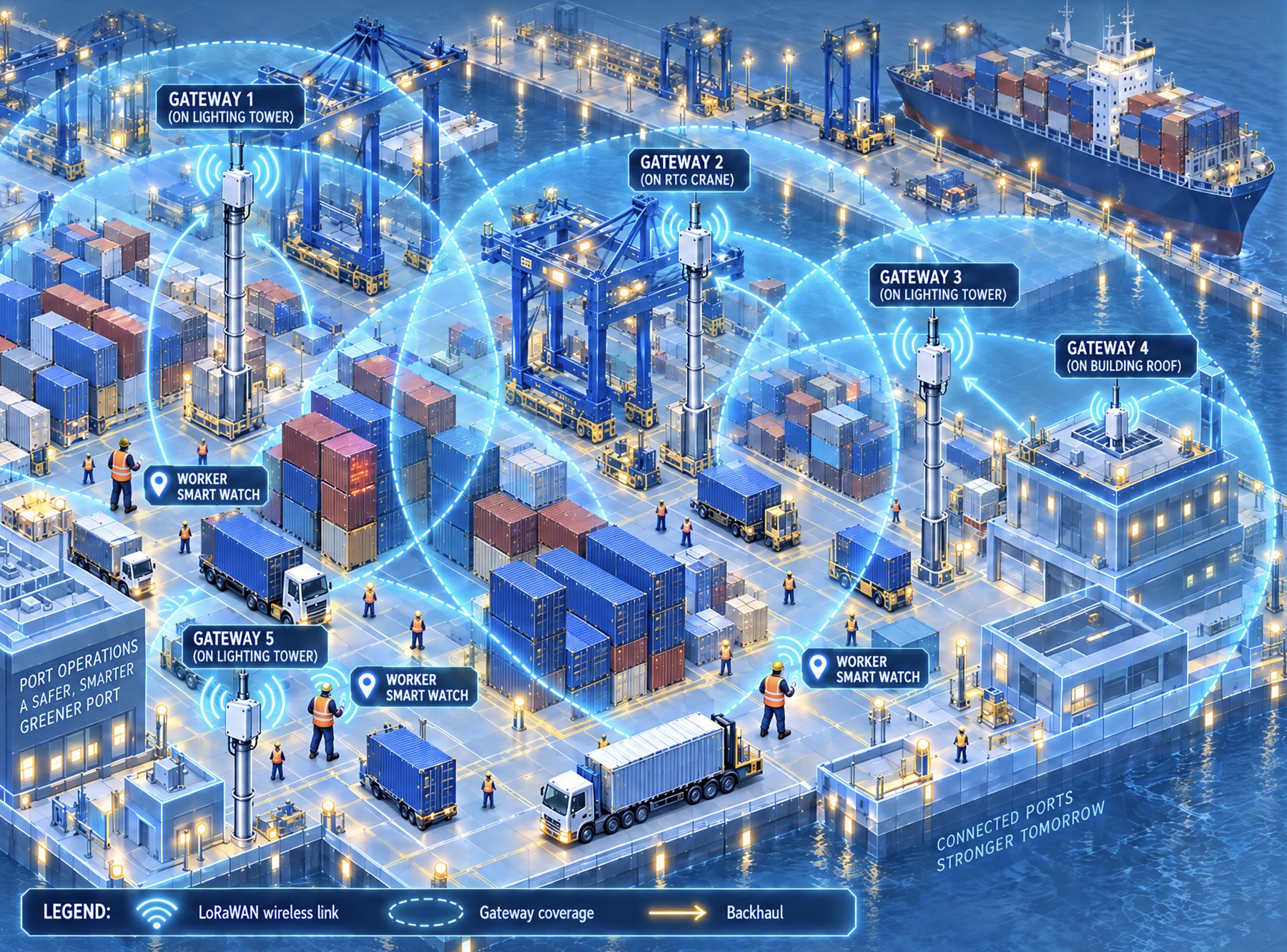
WSmart unifies yard visibility, equipment telemetry and worker safety on a single low-power wireless network. End-nodes stream data through gateways to a cloud platform for real-time awareness and automated alerts.
Asset & cargo tracking
GPS trackers, geofencing and yard inventory — containers, vehicles and high-value cargo on one map.
Equipment & structural health
Tilt, runtime and remote telemetry on cranes, booms and yard plant — abnormal movement shows up before it becomes an incident.
Worker safety
LoRa smart watch with SOS, fall detection and GPS location tracking — so yard crews stay visible across the terminal.
Centralised platform
Dashboards, multi-channel alerts and reporting — one view for the yard office and the operations team.
SIM-card advantage
One SIM on the gateway — not on every device
End-devices talk LoRaWAN to the gateway. The gateway uses cellular or ethernet backhaul. No SIM card is required for each watch or sensor — which keeps operating cost low across a large yard.
Low power · long range · low operating cost — LoRaWAN end-nodes without a cellular plan each.
Easy to deploy — wireless installation with no data cabling across the yard.
Long battery life — up to about 4 years, depending on the device and reporting interval.
Expand the network
Related LoRaWAN sensors for the port
Add devices as the yard needs them — the same gateways and platform already cover vessels and the terminal.
Vehicle GPS tracker
Live location and geofence for yard vehicles and handlers.
3-axis tilt sensor
Abnormal tilt, boom angle and wind sway on cranes and structures.
Reefer temp + humidity
Cold-chain alerts for refrigerated containers and stores.
Gas / hazard detector
Leak and toxic gas alerts around tanks and hazmat areas.
Vibration + temperature
Predictive maintenance on motors, pumps and rotating plant.
Why this supports compliance
Timestamped data for audits and insurance
Timestamped historical data supports ISM Code obligations, class society requirements, flag state audits and insurance documentation.
Coverage
LoRaWAN suits remote and distributed monitoring. Sensors run on batteries for years; coverage reaches 1–5 km in dense areas, 5–15 km suburban and up to 45 km in open water or rural sites.
Connected ports stay safer and easier to run — the same wireless stack that covers the vessel can cover the yard.
Next step
Book a site assessment
Tell us the vessel type, port or yard scope, what you already monitor, and what you need to solve. We will come back with an assessment.
Book a site assessment