
NMEA 2000 and proprietary edge protocol decoder
Marine edge hardware talks to the NMEA 2000 CAN bus and engine ports, processes PGNs and ECU streams, and turns them into standardised JSON.
CASE_02 · MARINE · Private vessel fleet
Edge computing, NMEA 2000 protocol decoding and wireless LoRaWAN mesh
A vessel solution that brings engine protocols, compartment sensors and shore-side views together — without drilling through watertight bulkheads.
Executive summary
Vessel managers need reliable telemetry to protect operations, track fuel use and plan maintenance. Shipboard environments make that hard — complex maritime protocols, metal compartments and strict cabling limits.
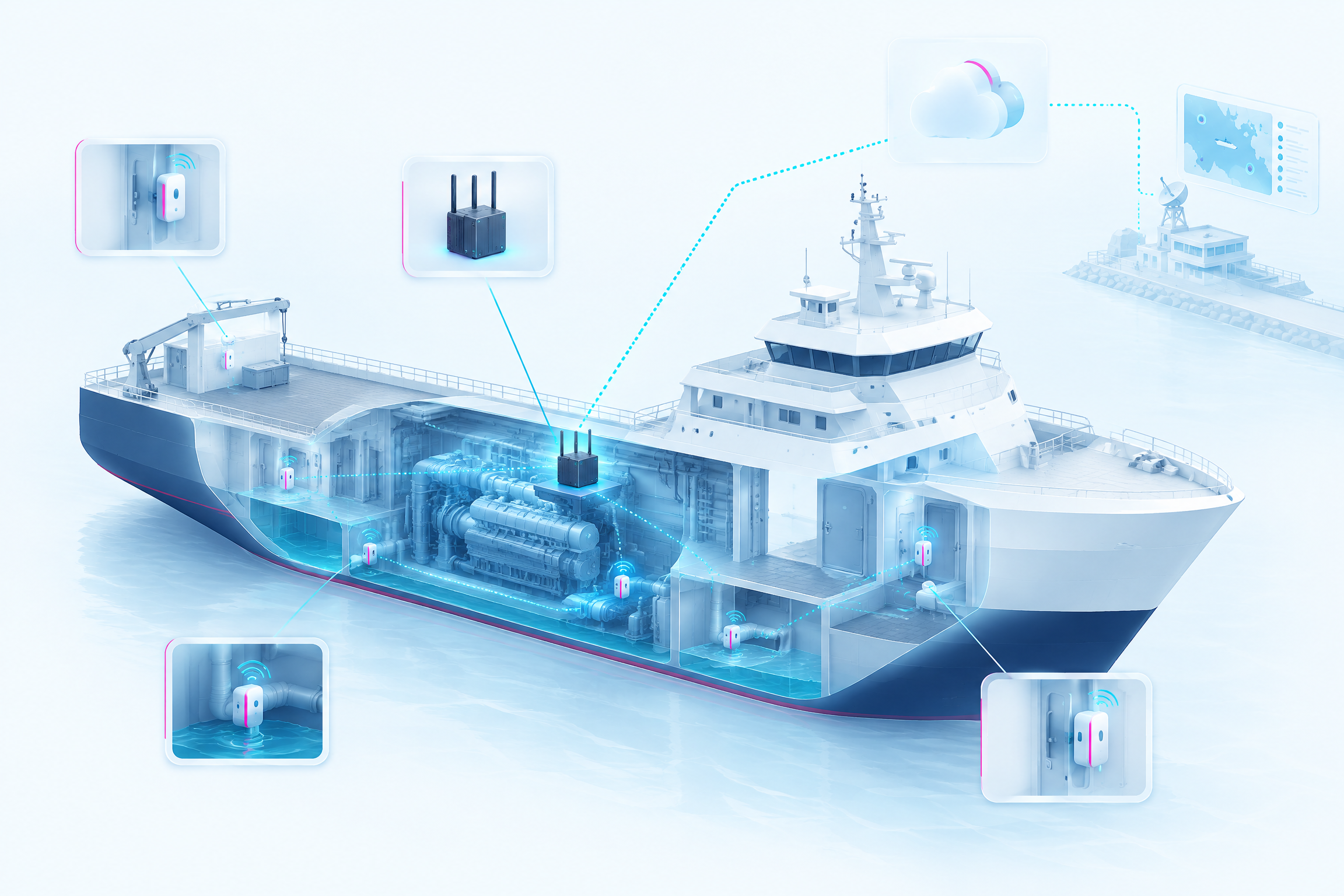
WSmart built marine telemetry and environmental monitoring for a private vessel operator. An edge marine protocol converter decodes NMEA 2000 and proprietary engine data in real time, with an on-board LoRaWAN sensor mesh into WSmart.io.
The edge system decodes NMEA 2000 CAN bus PGNs and proprietary engine metrics, then sends standardised telemetry over cellular or satellite. LoRaWAN sensors watch bilge water, engine-room temperature and door status — without damaging watertight bulkheads or long field cabling.
The challenge
Architecture pillar
WSmart designed a multi-tier maritime setup: local edge computing, protocol conversion, long-range wireless sensing and a central cloud view.
Marine edge hardware talks to the NMEA 2000 CAN bus and engine ports, processes PGNs and ECU streams, and turns them into standardised JSON.
Sensors across watertight compartments, bilges and engine rooms track bilge-pump triggers, water ingress, temperature and humidity — no drilling or conduit runs.
The WSmart Edge Gateway caches decoded telemetry during blackouts and syncs history when the link returns.
The shore dashboard shows engine health — RPM, oil pressure, coolant temperature, fuel rate and running hours — plus fault codes, bilge-flood warnings and history.
Outcome
About WSmart
WSmart builds custom IoT systems for existing sites — web and mobile applications, dashboards and alerts, plus hardware links over protocols such as LoRaWAN, BACnet, Modbus, BLE and MQTT — so teams in Hong Kong and Malaysia get a system that fits their workflow.
Next step
Tell us the building type, floor area, what systems are already installed, and what you need to solve. We will come back with an assessment.
Book a site assessmentFAQ
Yes in many installs: edge protocol decoding (including NMEA 2000 context) plus wireless vessel monitoring reduces invasive cabling through watertight structure. You get one view for vessel sensors and alerts to shore or crew workflows. Classification or survey constraints need client-supplied wording before we publish them.